Why Do I Not Think Babies Are Cute?
At that place are actually some traits that babies possess that automatically trigger our brains into feeling a sense of joy. According to an Austrian ethologist, the cuteness traits include a large, rounded head, big eyes and a few others.
Babies. Simply hearing the word makes us want to caress those adorable piffling infants. They're cuteness is strong, they can calm any anger, and allay whatsoever sadness. Equally they grow older, their faces change and we no longer feel the overwhelming urge to cuddle and care for them. This raises some scientific questions: are babies meant to be cute? Are we hardwired by nature to notice them adorable? Or is there something more to it?
Recommended Video for you:
Kindchenschema : The Cuteness Traits:
All babies accept a few things in common: a big, rounded caput, a large forehead, big eyes, chubby cheeks, a rounded body and soft, elastic skin.
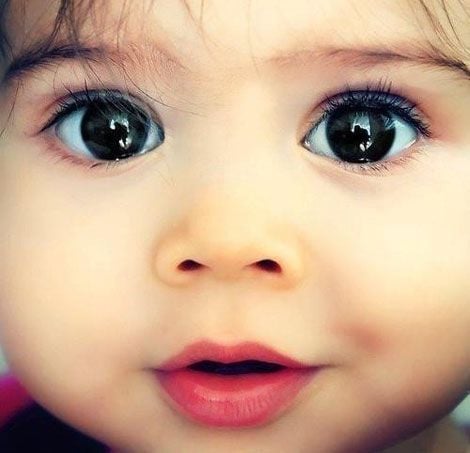
Kindchenschema, or the cuteness traits such are big round eyes, and a big, stubby face make babies, or anything with those traits announced cute
This is the Kindchenschema or "Baby Schema" or "cuteness traits". Konrad Lorenz, an Austrian ethologist (ethology is the written report of animal behavior) proposed kinderschema in 1943 to explain why we discover babies beautiful. Co-ordinate to Lorenz, this is an evolutionary tactic to get us to take care of babies that can't otherwise do anything for themselves. In fact, the kinderschema works on more than just babies.
Baby animals: kittens, puppies, koalas or chicks, fictional characters like Mickey Mouse or BB-viii from Star Wars all fall within this cuteness spectrum. Take BB-8, for example. It has everything that Lorenz would call cute–a large round caput that is large in proportion to its larger round body, forth with large round eyes. All this roundness makes BB-8 look irresistibly chubby. BB-8 is so cute that its $149 effigy sold out in less than fifteen minutes on Amazon.
What's the Betoken of this Cuteness?
This cuteness is all thanks to development. In 2009, researchers at the University of Pennsylvania put Lorenz'southward Kindchenschema to the experimental exam for the first time. They asked 122 undergraduate students to rate the cuteness of infants. The researchers plant that the cuter the undergrads rated the baby, the more than they wanted to treat the infant.
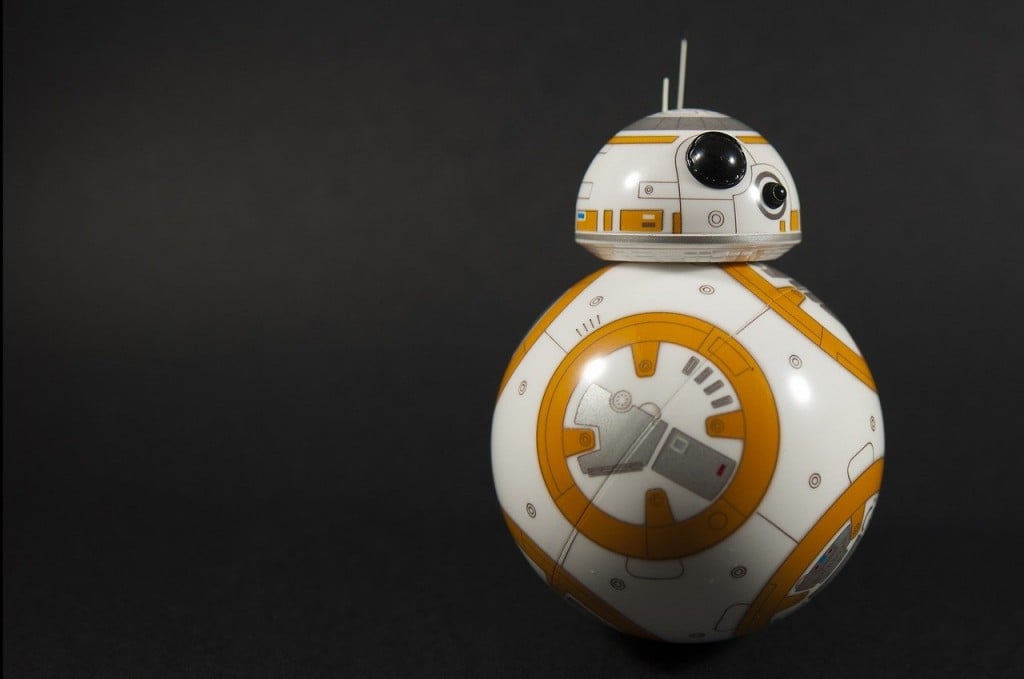
BB-8 is a perfect example of how the the cuteness traits can make even non-human being objects look cute
Lorenz's evolutionary explanation fits here. These features of cuteness brand adults and children want to care for babies. It isn't but an emotional 'awwwwwww', but a physical urge to protect and nurture. Our bodies announced to exist hardwired to respond affectionately to cuteness.
That makes sense because, without adult caretakers, babies wouldn't make it into adulthood. Human babies are peculiarly vulnerable, every bit compared to many other animals, since they require care for a much longer time. Man babies acquire to walk when they are a yr or and so old, while many other animals, like foals, are up on their feet mere hours after birth. Human babies need their mother's milk for up to the get-go ii years of their lives, while kittens need to be weaned past their mother for only one calendar month, at to the lowest degree.
Without this cuteness, I doubt any of us would want to accept intendance of babies. They are a bit disgusting, with all the pooping, spitting upwards, and other bodily fluid spurting out uncontrolled and without warning. They don't make good chat partners considering they tin can't talk yet. They tin can't melt, clean, hunt, or gather food. To ensure that the hereafter of the species remains secure, babies evolved cuteness.
When and how cuteness and other such traits, like pilus or a lack of it, rolls of chins or crying, evolved is challenging to report. Evolutionary biologists await for genetic or epigenetic clues to figure out how a trait evolved. Was it a byproduct of another trait evolving, a spandrel, or was it a random mutation or genetic recombination event that turned out to be useful? For cuteness, we don't know how our genes control infant confront structure or why we want to nurture cute things.
Cuteness changes us
There is a fair amount of research showing that our bodies respond to cuteness through measurable physiological changes. In ethology, this phenomenon is chosen 'innate releasing mechanisms', an instinct (like cuddling a baby) that is hardwired into an organism's neural networks. A 2016 review set out to understand how the brain responds to cuteness, not only in terms of a baby's advent, only as well related to infant'south voices and gestures. Research shows that babies and childbirth can change both parents' brains. For not-parents also, certain neurological pathways are activated in the presence of babies or anything that follows the 'baby schema' (like BB-8).
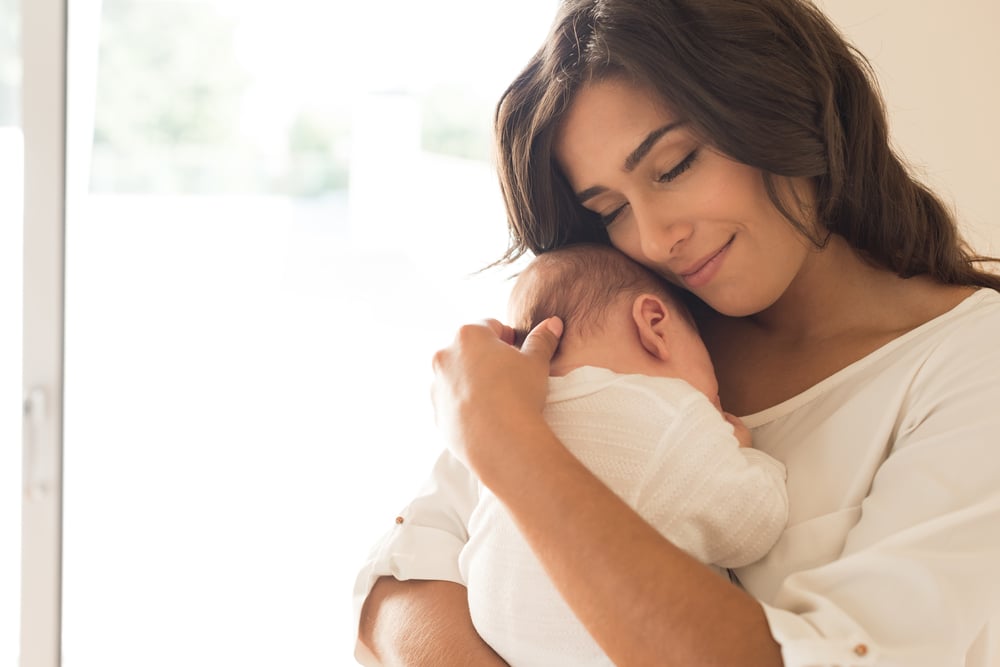
Cuteness is designed to invoke protective and maternal feelings towards the beautiful thing, like babies. (Photo Credit: Trendsetter Images/Shutterstock)
Infant cuteness can bulldoze people to more empathy and might fifty-fifty have implications for our moral behavior. The compelling paradigm of a iii-year-erstwhile Syrian refugee in 2015 changed the outlook of the refugee crisis for many. Information technology made people wake up to the crisis at manus, all considering of an image of an babe in distress. Such responses are powerful.
Nevertheless, not all of us reply to cuteness with the same intensity. Research has shown that women are more sensitive to cuteness than men, simply not by a large margin. A 2009 written report recorded how women and men in different age groups responded to cute or not-cute photos. They found that women in their prime birth-giving years–19 to 26 years old, were the nigh sensitive to cuteness, while mail service-menopausal women (51+ years of age) were the least sensitive.
This also reveals a hormonal link to our response to cuteness, and seems to support the caregiver hypothesis. Young women'south bodies are biologically gear up for childbirth and rearing, so it would make sense to be more responsive to a baby's charm. However, to what extent this is biological or a learned cultural response hasn't fully been studied. Many women take reported not finding babies cute at all, yet they find many other conventionally cute things beautiful. This challenges the ''hardwired' to take care of babies hypothesis.
Next time y'all run across an adorable baby and struggle to go on a grinning off your face, only remember why. To keep the cuteness factor high, let's all take care of the little ones whenever nosotros tin can and proceed them from whatever impairment.
Assistance usa make this commodity better
Source: https://www.scienceabc.com/nature/why-do-we-find-babies-cute.html

Post a Comment for "Why Do I Not Think Babies Are Cute?"